Introduction
Choosing a healthcare plan should never feel like gambling with your life savings. Yet many people unknowingly enroll in an HMO not accredited by NHIA without realizing the serious risks involved. On the surface, the offer may look attractive. Low premiums, quick registration, and bold promises of comprehensive coverage. But without proper accreditation from the National Health Insurance Authority, those promises can quickly collapse when you need medical care the most.
The truth is simple. An HMO not accredited by NHIA operates outside the full regulatory supervision that protects enrollees. That means fewer safeguards, weaker accountability, and greater exposure to financial loss. When medical emergencies happen, and they often do without warning, you do not want to discover that your insurance provider cannot settle hospital bills or honor claims.
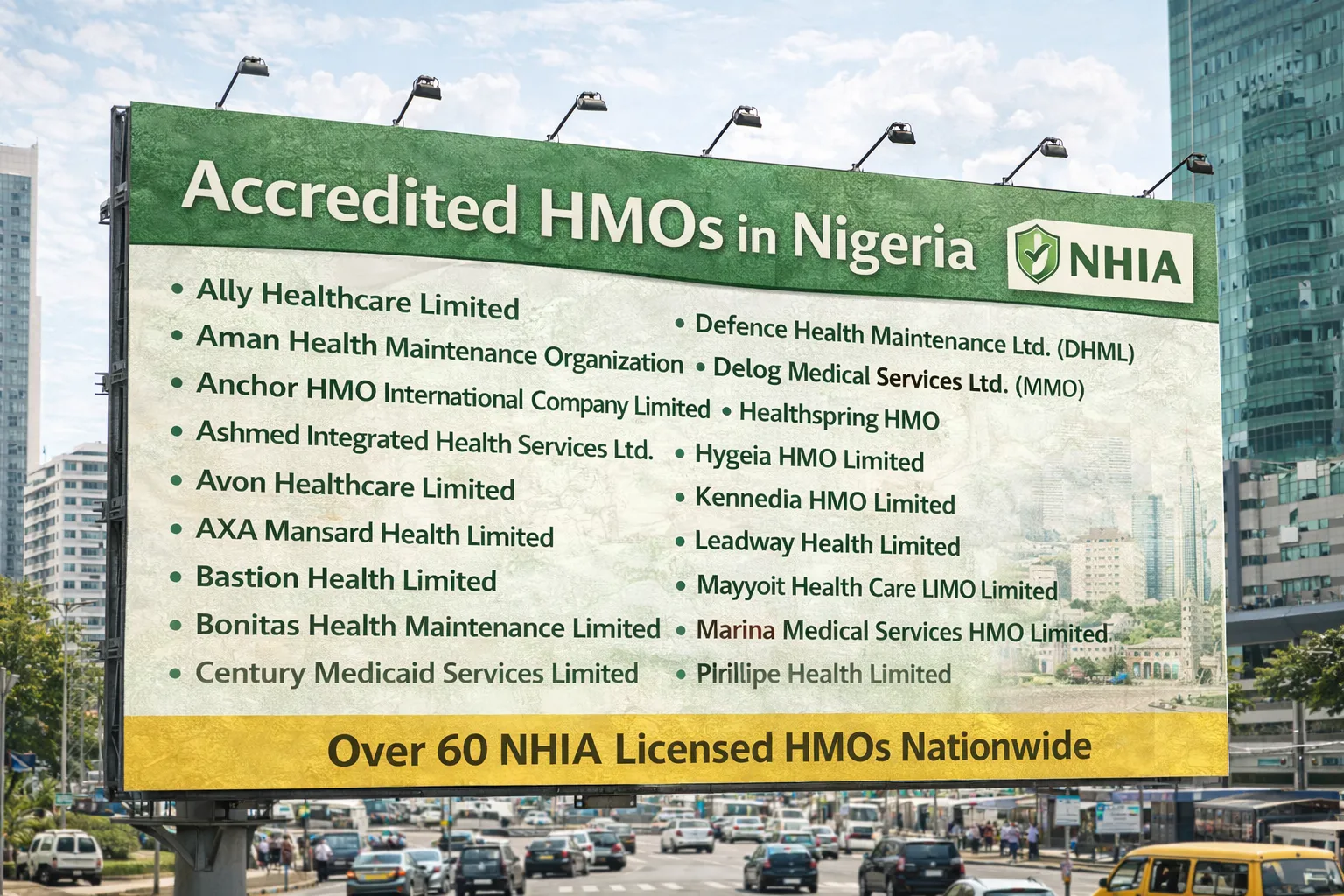
The National Health Insurance Authority was created to regulate health insurance providers and ensure they meet strict operational, financial, and ethical standards. You can verify official accreditation directly through the NHIA website at https://www.nhia.gov.ng
. This step alone can save you from devastating consequences.
Your health is too important to leave to chance. In this article, you will discover seven powerful reasons why choosing an HMO not accredited by NHIA puts your health, finances, and peace of mind at serious risk.
Understanding NHIA Accreditation

NHIA accreditation is not just paperwork. It is a seal of approval that confirms an HMO has met national standards for financial capacity, service delivery, transparency, and consumer protection. When an organization becomes accredited, it means the government has evaluated its operations and confirmed that it can responsibly manage members funds and healthcare services.
An HMO not accredited by NHIA does not go through this strict screening process. That alone should raise concern. Accreditation requires proof of financial reserves, qualified personnel, strong provider networks, and compliance with national healthcare policies. Without these checks, there is no guarantee the organization can deliver on its promises.
The NHIA plays a central role in protecting enrollees. It monitors performance, investigates complaints, and ensures HMOs follow ethical practices. This oversight reduces the risk of fraud, mismanagement, and sudden shutdowns. When you choose a regulated HMO, you gain more than insurance. You gain structured protection backed by national authority.
In contrast, enrolling in an HMO not accredited by NHIA removes that safety layer. If disputes arise, you may struggle to find proper channels for resolution. If the company collapses, your coverage could disappear instantly. That is why accreditation matters. It creates accountability and builds trust.
Healthcare decisions affect your life and your family. Understanding the difference between accredited and non accredited providers helps you make a safer and smarter choice.
Understanding NHIA Accreditation

NHIA accreditation is not just paperwork. It is a seal of approval that confirms an HMO has met national standards for financial capacity, service delivery, transparency, and consumer protection. When an organization becomes accredited, it means the government has evaluated its operations and confirmed that it can responsibly manage members funds and healthcare services.
An HMO not accredited by NHIA does not go through this strict screening process. That alone should raise concern. Accreditation requires proof of financial reserves, qualified personnel, strong provider networks, and compliance with national healthcare policies. Without these checks, there is no guarantee the organization can deliver on its promises.
The NHIA plays a central role in protecting enrollees. It monitors performance, investigates complaints, and ensures HMOs follow ethical practices. This oversight reduces the risk of fraud, mismanagement, and sudden shutdowns which leaves the enrollee stranded in most cases and i have seen it happen in real time. When you choose a regulated HMO, you gain more than insurance. You gain structured protection backed by national authority.
In contrast, enrolling in an HMO not accredited by NHIA removes that safety layer. If disputes arise, you may struggle to find proper channels for resolution. If the company collapses, your coverage could disappear instantly. That is why accreditation matters. It creates accountability and builds trust.
Your healthcare decisions affect your life and your family. Understanding the difference between accredited and non accredited providers helps you make a safer and smarter choice.
Reason 1: High Risk of Financial Loss
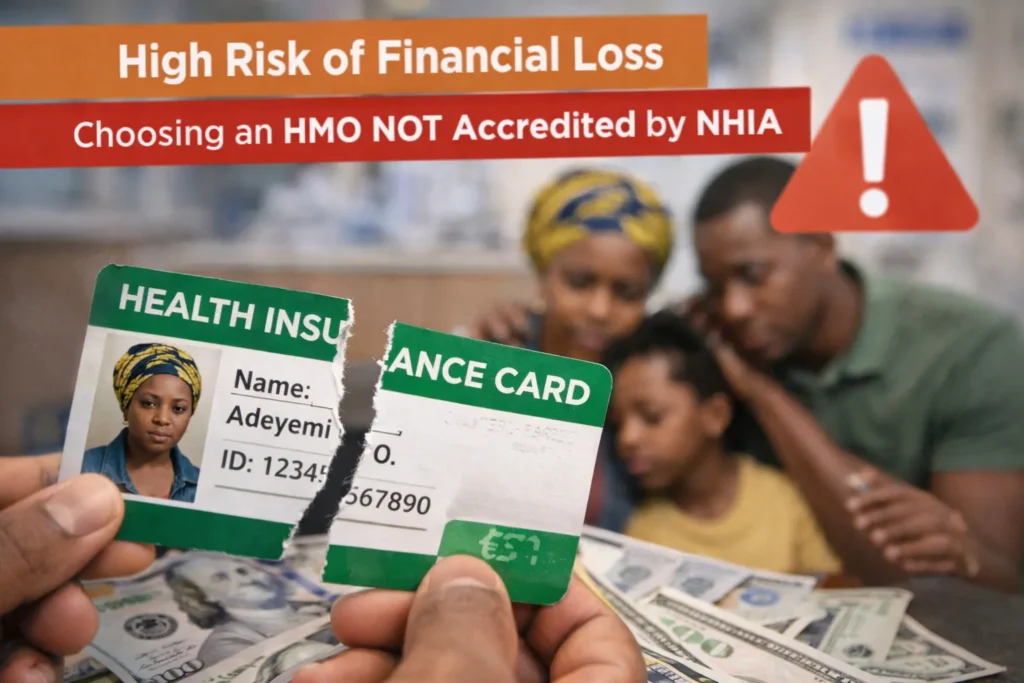
One of the biggest dangers of using an HMO not accredited by NHIA is financial instability. Insurance works on trust. You pay premiums regularly with the expectation that your provider will cover medical expenses when necessary. But without NHIA oversight, there is no strong guarantee that your money is being managed responsibly.
Accredited HMOs must maintain financial reserves to ensure they can pay hospitals and settle claims. They undergo audits and regulatory reviews. These systems protect members from sudden financial collapse. However, an HMO not accredited by NHIA may operate without sufficient capital or proper financial reporting.
Imagine paying into a health plan for years, only to discover during surgery that your provider cannot pay the hospital. In that moment, the burden shifts to you. Medical bills can drain savings, force loans, or create long term debt that many never recover from and in my years of experience in the health insurance space the sight of this is not palatable at all.
Fraud is another serious concern. Some unregulated providers attract customers with extremely low premiums that seem too good to ignore. But when claims increase, the system breaks down. Without accountability, members are left stranded.
Financial security should be the foundation of any healthcare plan. Choosing a verified and regulated HMO protects your hard earned income and ensures that your contributions are safe. With an HMO not accredited by NHIA, that protection simply does not exist.
Reason 2: Limited Access to Quality Hospitals
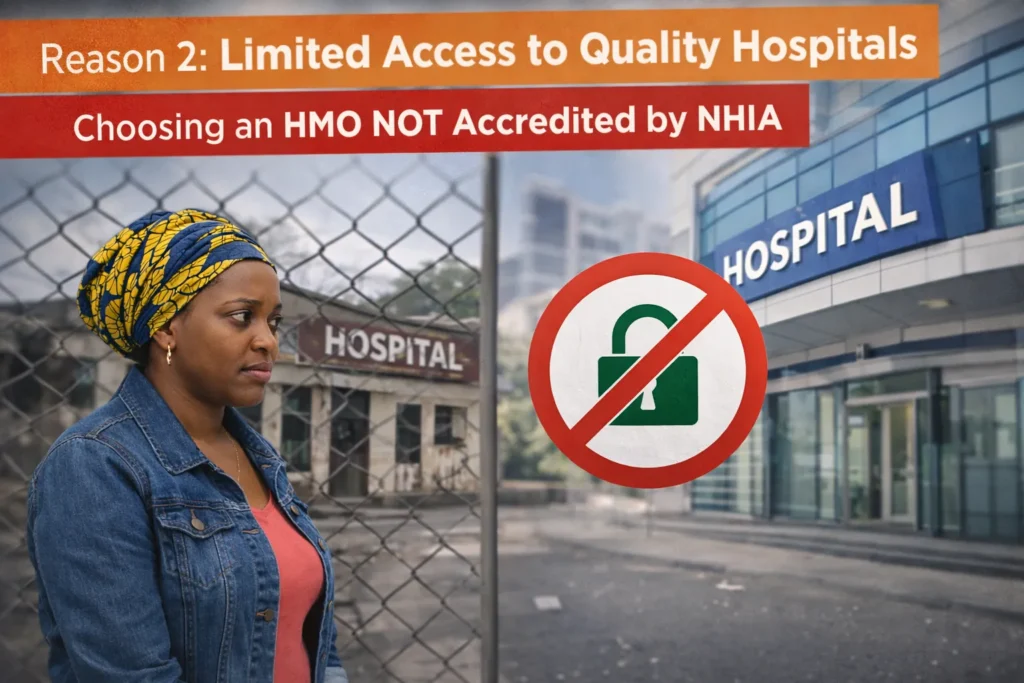
Access to trusted healthcare providers is essential. An HMO not accredited by NHIA may not have strong partnerships with reputable hospitals and clinics. This can lead to serious treatment delays or outright rejection at medical facilities.
Accredited HMOs are required to maintain agreements with approved healthcare providers that meet quality standards. These hospitals are evaluated for availability of the right medical equipment, staffing, and service quality. This ensures members receive professional and reliable care.
In contrast, unaccredited providers may partner with poorly equipped clinics to reduce costs. In emergencies, you might discover that your insurance is not recognized at major hospitals. That delay can be life threatening.
Quality healthcare access can directly affects survival and recovery outcomes. Proper diagnosis, skilled doctors, and functional equipment make all the difference. Choosing an HMO not accredited by NHIA increases the risk of limited care options and compromised treatment standards.
Your health deserves dependable access to quality hospitals. Accreditation helps ensure that promise is fulfilled.
Reason 3: No Legal Protection for Enrollees

When you enroll in a health plan, you are entering into a contract. That contract should protect you, not trap you. One of the biggest dangers of choosing an HMO not accredited by NHIA is the absence of strong legal protection. Without regulatory oversight, you are largely on your own if disputes arise.
The National Health Insurance Authority exists to regulate and supervise health insurance providers across the country. Accredited HMOs must comply with operational guidelines, financial standards, and ethical requirements. If they fail to meet these obligations, the NHIA can impose sanctions, fines, or even suspend their license. That layer of accountability gives enrollees confidence and leverage.
Now imagine dealing with an HMO not accredited by NHIA. If your claim is denied unfairly or your coverage terms are changed without proper notice, where do you turn? There may be no structured complaint resolution channel. Customer service lines may delay responses. Emails may go unanswered. Without regulatory enforcement, your rights as a consumer are significantly weakened.
Legal protection also ensures transparency. Accredited providers must clearly outline benefit packages and exclusions. They cannot arbitrarily introduce new charges or remove coverage without following due process. Unaccredited HMOs may modify policies in ways that favor their interests, leaving members confused and financially exposed.
Healthcare utilization disputes are stressful enough. The last thing you need during illness is a battle with your insurance provider. Choosing an HMO not accredited by NHIA removes the safety net that legal oversight provides. When your health and finances are at stake, that is a risk you should never take.
Reason 4: Delayed or Denied Claims
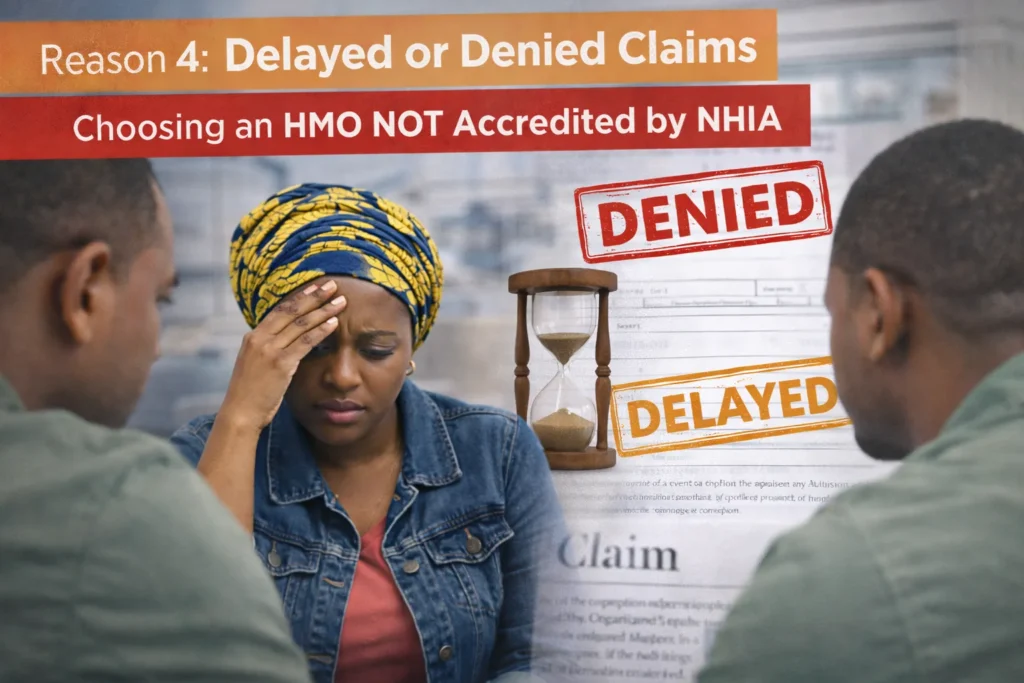
Fast and fair claims processing is the backbone of any reliable health insurance plan. Unfortunately, an HMO not accredited by NHIA may often lack the structured systems and financial stability required for efficient claims management. The result is delayed approvals, partial payments, or outright denials.
Accredited HMOs operate under strict guidelines that define how claims should be processed. They are monitored to ensure hospitals are paid promptly and members are not subjected to unnecessary delays. This regulatory supervision encourages efficiency and accountability.
In contrast, an HMO not accredited by NHIA may struggle with internal inefficiencies or inadequate funds. When claims pile up, payment delays become common. Hospitals may begin rejecting patients affiliated with the HMO due to unpaid bills. Members then find themselves paying out of pocket for treatments that should have been covered by their HMOs.
Imagine undergoing surgery and being told afterward that your insurance has not authorized payment. The financial and emotional stress can be overwhelming. Instead of focusing on recovery, you are worrying about hospital bills and reimbursement disputes.
Delayed claims also erode trust between hospitals and insurance providers. When facilities lose confidence in an HMO, they may limit services or terminate agreements entirely. This directly affects members who rely on that network.
Reliable coverage means your claims are processed without drama or confusion. Choosing an HMO not accredited by NHIA increases the likelihood of frustrating delays and unexpected expenses. Healthcare should bring relief, not additional financial pressure.
Reason 5: Sudden Shutdown Without Warning
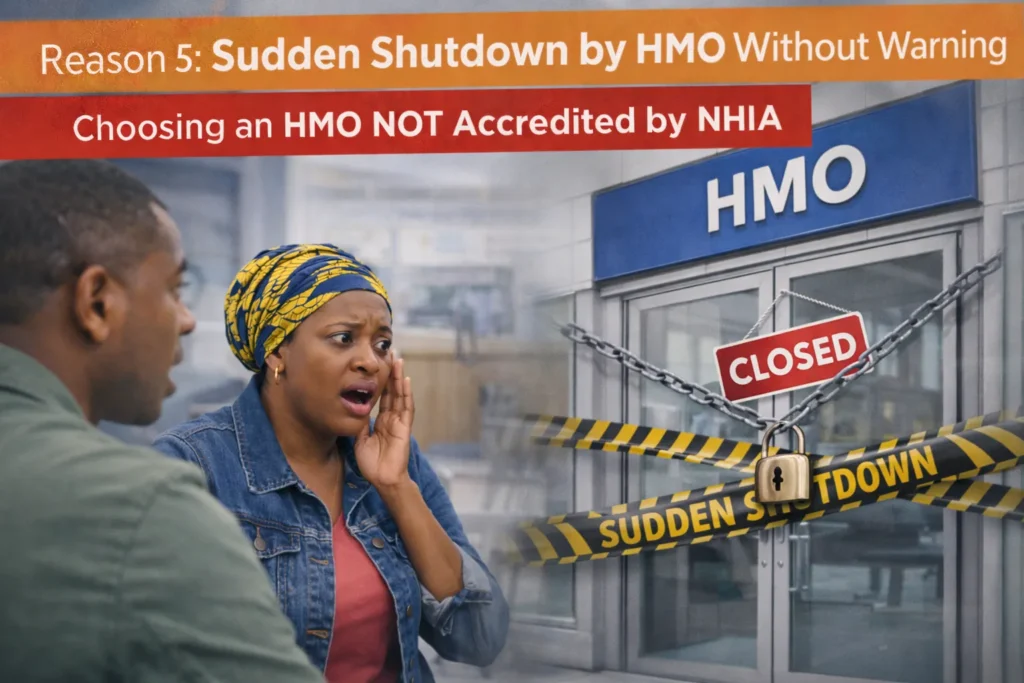
One of the most alarming risks of enrolling in an HMO not accredited by NHIA is the possibility of sudden closure. Financial instability, poor management, or regulatory issues can cause unaccredited providers to shut down abruptly, leaving members stranded.
Accredited HMOs are required to maintain financial reserves and meet operational benchmarks. Regular monitoring by the NHIA helps identify warning signs early. This reduces the risk of unexpected collapse and protects members from losing coverage overnight.
An HMO not accredited by NHIA does not operate under the same strict supervision. If financial mismanagement occurs, it may go unnoticed until it is too late. When such an organization shuts down, members often lose access to healthcare services immediately. Pending claims may remain unpaid. Contributions may become unrecoverable.
The impact can be devastating. Families relying on ongoing treatments such as maternity care, chronic disease management, or scheduled surgeries suddenly find themselves without support. Restarting the enrollment process with a new provider takes time, and during that period, medical needs do not pause.
Healthcare coverage should provide stability and peace of mind. Instead, an unaccredited provider introduces uncertainty. You never want to wake up to headlines announcing that your HMO has ceased operations.
Financial security and continuity of care matter. Choosing an HMO not accredited by NHIA exposes you to the risk of abrupt disruption when you need stability the most.
Reason 6: Hidden Charges and Unclear Benefits

Transparency is a hallmark of a trustworthy insurance provider. Accredited HMOs must clearly define their benefit packages according to NHIA standards. This ensures members understand what is covered, what is excluded, and what limits apply.
With an HMO not accredited by NHIA, transparency is often compromised. Benefit packages may appear comprehensive at first glance, but hidden exclusions and vague language can create unpleasant surprises. Routine treatments may be covered, but specialized services might carry unexpected costs.
Some unaccredited providers advertise low premiums to attract customers. However, these lower costs often come with restricted benefits or additional charges not clearly disclosed during enrollment. When members seek care, they discover that essential services fall outside the coverage scope.
Fine print can become your worst enemy. Without regulatory oversight, there is less incentive for clarity and fairness. Members may face co payments or service limitations that were not clearly explained.
Your health insurance plan buying decisions should be based on clear information. When you choose an HMO not accredited by NHIA, you risk navigating confusing policy terms without adequate protection.
Clarity builds trust. Hidden charges destroy it. Accreditation ensures a standardized structure that protects consumers from misleading promises.
Reason 7: Weak Data Protection and Privacy Risks
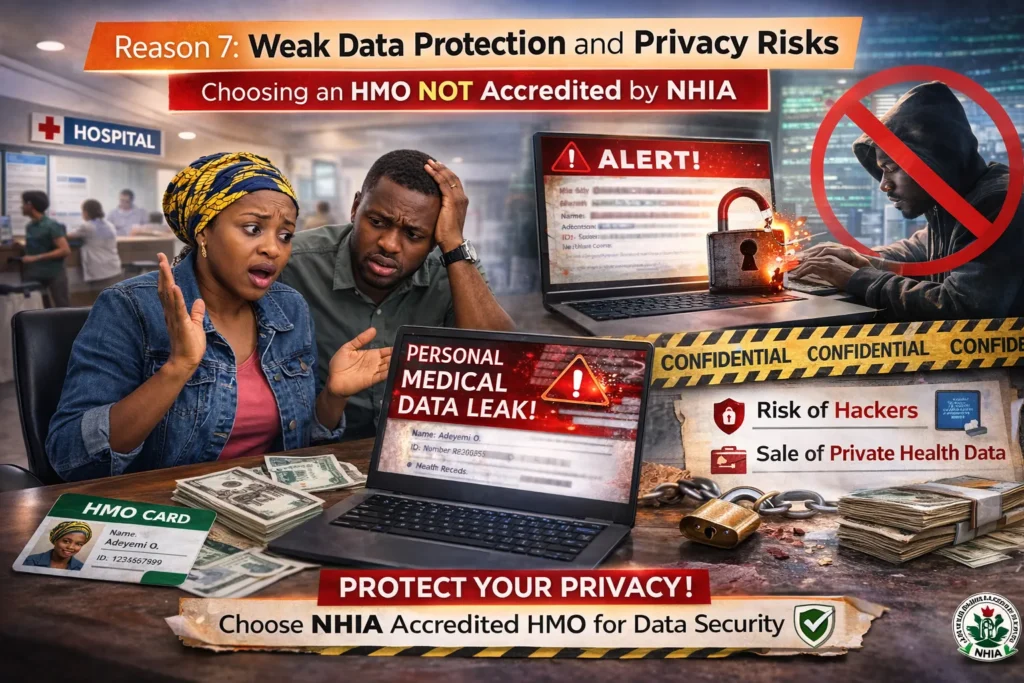
Your medical records contain deeply personal information. From diagnostic results to identification details, healthcare data must be handled with strict confidentiality. Accredited HMOs are required to follow compliance standards that protect member data and maintain secure systems.
An HMO not accredited by NHIA may not adhere to robust data protection practices. Weak cybersecurity systems increase the risk of unauthorized access, data breaches, and identity theft. Personal medical information could be exposed or misused.
Data protection is not just a technical issue. It is a matter of trust and dignity. Patients should feel confident that their health history remains private and secure. Regulatory oversight encourages the adoption of secure digital systems and ethical handling of information.
In a world where cyber threats continue to rise, ignoring data security is dangerous. An unaccredited provider may prioritize cost savings over system upgrades, leaving sensitive information vulnerable.
Choosing an HMO not accredited by NHIA means accepting uncertainty not only in financial and medical coverage but also in personal data safety. Accreditation provides an added layer of assurance that your information is treated with the seriousness it deserves.
How to Verify NHIA Accreditation
Protecting yourself starts with verification. Before enrolling in any plan, confirm whether the provider is officially recognized. Visit the official NHIA website at https://www.nhia.gov.ng/hmo/
and review the list of accredited HMOs.
You can also contact the authority directly to confirm the status of a provider. Look for official documentation and ensure the accreditation is current. Be cautious of vague claims or outdated certificates.
Verification takes only a few minutes but can prevent years of regret. Never assume legitimacy. Always confirm it.
Conclusion
Your health insurance buying decisions shape your financial stability and personal wellbeing. Choosing an HMO not accredited by NHIA exposes you to financial loss, poor medical access, weak legal protection, delayed claims, hidden charges, data risks, and possible sudden shutdown.
Accreditation is more than a label. It is a safeguard. It ensures accountability, transparency, and structured consumer protection. Before enrolling in any plan, verify its status through the official NHIA website.
Your health deserves security, not uncertainty. Make informed decisions. Choose protection that is verified and regulated.
FAQS
- How can I confirm if an HMO is accredited by NHIA
Visit https://www.nhia.gov.ng/hmo/
and check the official list of accredited providers or contact the authority directly for confirmation. - What happens if my HMO is not accredited by NHIA
You may face financial risks, denied claims, limited hospital access, and lack of regulatory protection. - Is NHIA accreditation mandatory for HMOs in Nigeria
Yes, accreditation ensures compliance with national health insurance regulations and consumer protection standards. - Can I switch from an unaccredited HMO to an accredited one
Yes, you can transition to a verified provider after reviewing terms and confirming accreditation status. - Why is an HMO not accredited by NHIA considered risky
Because it lacks strong oversight, financial guarantees, and standardized service requirements.
| |||||||||||
| Odilo Alexander (Editor-in-Chief) is a registered Nurse RN BSN trained at the University of Benin and licensed by the Nursing and Midwifery Council of Nigeria. With over eight years of experience across clinical and managed care settings including leadership roles in claims management and HMO operations, AOBLOG provides practical and evidence based wellness and health insurance education for Africa. |