Introduction
Understanding how health insurance works in Nigeria is no longer optional. It is essential. Healthcare costs are rising, and families across the country are feeling the pressure. One emergency surgery, one complicated delivery, or one unexpected diagnosis can disrupt years of savings. That is why learning how health insurance works in Nigeria is one of the smartest financial decisions you can make.
Let us be honest. Many families enroll in a health plan without fully understanding what they are paying for. They hear the words coverage, HMO, premium, and accreditation, but the structure behind these terms remains unclear. When medical needs arise, confusion follows. Bills appear. Claims are delayed. Expectations are not met. All because the system was not fully understood from the beginning.
How health insurance works in Nigeria is actually simple when broken down properly. At its core, it is a prepaid healthcare financing system. Families and or organisations contribute a fixed amount regularly. In return, an accredited provider pays for medical services according to an agreed benefit package.
The system is regulated by the National Health Insurance Authority. The NHIA ensures that health insurance providers follow strict standards to protect consumers. You can verify official information directly on the NHIA website at https://www.nhia.gov.ng/
. This step alone can prevent costly mistakes.
In this complete guide, you will learn how health insurance works in Nigeria, how to enroll correctly, what is covered, what is excluded, and how to choose a trusted provider for you and your lovely family.
What Is Health Insurance
Before diving deeper into how health insurance works in Nigeria, let us simplify the concept of insurance itself. Imagine healthcare costs as unpredictable rain. Some months are dry. Other months bring storms. Health insurance acts like a strong roof. You pay a small, steady amount to ensure that when the storm hits, you are protected.
Health insurance is a financial agreement between you and a provider. You pay regular contributions called premiums. In exchange, the provider covers part or all of your medical expenses based on the agreed terms.
Without insurance, healthcare operates on direct payment. You visit a hospital. You pay the full bill. That system can be devastating when costs are high. With insurance, the risk is shared across many contributors. This spreads financial pressure and protects individuals from sudden large expenses.
Understanding how health insurance works in Nigeria requires understanding this shared risk principle. Thousands of people contribute into a structured system. When someone falls ill, funds are drawn from the pool to cover treatment.
It is not magic. It is organized financial planning.
For corporates and or families, health insurance provides stability. It protects savings, prevents emergency borrowing, and ensures access to quality care without financial panic.
The key is choosing a provider that operates within the regulated framework established by the NHIA. This ensures your contributions are secure and your coverage is reliable.
How Health Insurance Works in Nigeria
Now let me break down exactly how health insurance works in Nigeria.
The system operates under the supervision of the National Health Insurance Authority. The NHIA regulates Health Maintenance Organizations and healthcare providers to ensure compliance with national standards.
Here is how health insurance works in Nigeria in practical terms:
First, individuals or employers select an accredited HMO. This provider manages the health plan.
Second, the member pays premiums monthly, quarterly, bianually or annually. Employers may deduct contributions directly from salaries for staff plans.
Third, the HMO assigns registered members to approved hospitals within its network.
Fourth, when a member visits a hospital, the provider verifies enrollment status. Treatment is provided according to the benefit package.
Fifth, the hospital bills the HMO directly. The member typically does not pay the full cost at the point of service, except for agreed copayments.
This structured approach ensures predictable healthcare financing.
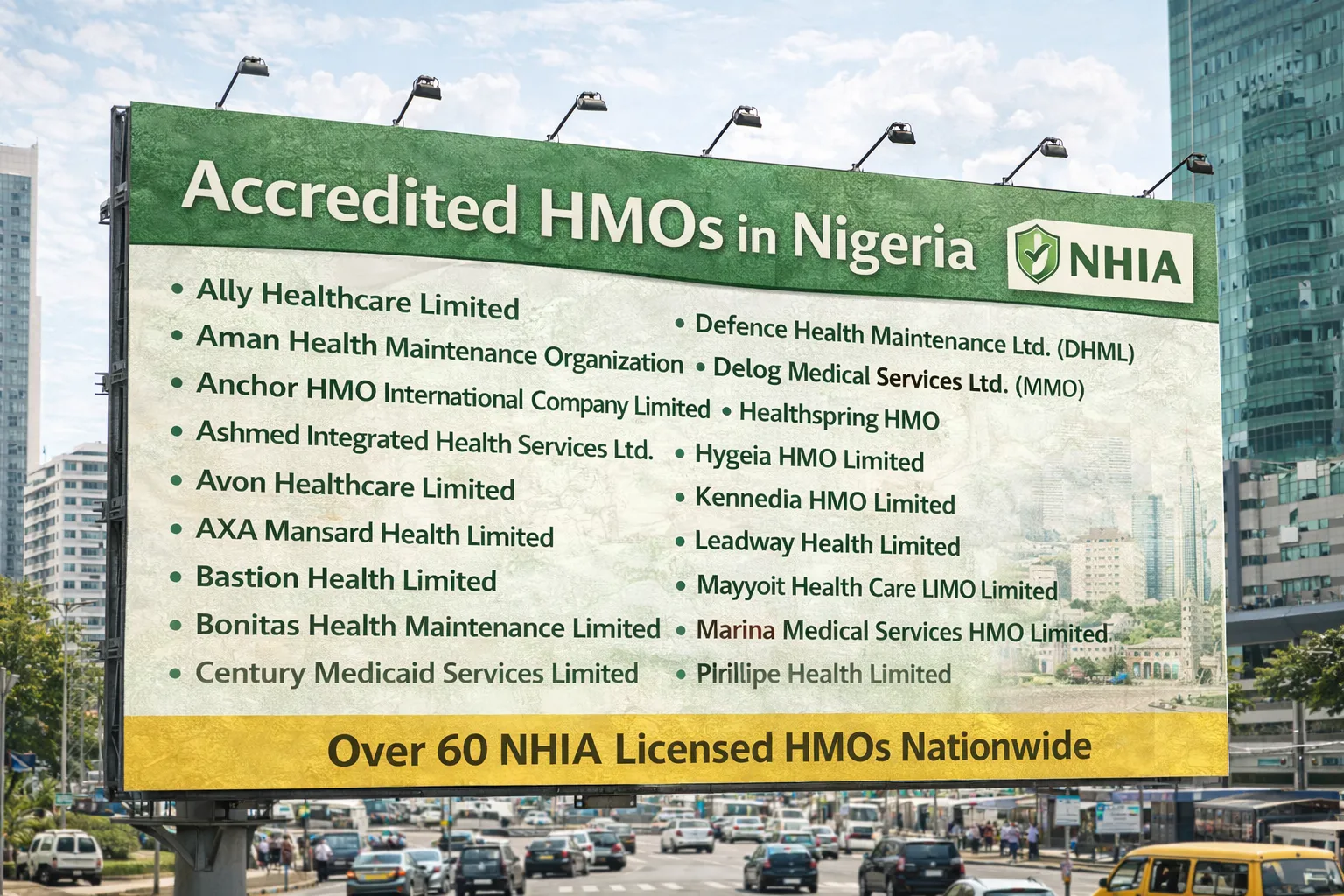
To confirm that your provider operates legally, always verify through the official NHIA website at https://www.nhia.gov.ng/hmo/
.Accreditation ensures financial capacity, operational transparency, and consumer protection.
When families understand how health insurance works in Nigeria, they are empowered. They ask better questions. They avoid risky providers. They choose plans that match their needs.
The Role of the National Health Insurance Authority
The National Health Insurance Authority plays a powerful role in ensuring that health insurance works effectively across Nigeria. Without regulation, the system would lack structure and accountability.
The NHIA sets standards for HMOs. It ensures that providers maintain proper hospital networks. It investigates complaints and enforces compliance.
Why does this matter to families?
Because understanding how health insurance works in Nigeria includes understanding who protects you. The NHIA serves as that protective authority.
If you ever doubt the legitimacy of a HMO provider, you can verify accreditation status through the official website at https://www.nhia.gov.ng/hmo/ . Regulation strengthens trust. It ensures that the system is not just functional, but dependable.
Types of Health Insurance Plans in Nigeria
To fully understand how health insurance works in Nigeria, you need to know the different types of plans available. Not all insurance plans are the same. Each one is designed to serve a specific group of people.
Public Health Insurance Schemes
Public health insurance schemes are structured under government regulation and supervised by the National Health Insurance Authority. These plans are designed to expand access to healthcare across different income groups. They often target civil servants, organized private sector workers, and vulnerable populations.
Public schemes operate within a defined regulatory structure. This means they must follow national standards. When learning how health insurance works in Nigeria, it is important to understand that public schemes are typically more standardized. They provide essential healthcare coverage such as consultations, basic laboratory services, maternity care, and certain medications.
The major advantage of public schemes is stability. Since they are regulated by the NHIA, they are required to maintain transparency and accountability.
Private Health Insurance Options
Private health insurance plans are offered by licensed Health Maintenance Organizations. These plans are often more flexible and may provide expanded coverage options depending on the premium level.
Private plans can include additional services such as advanced diagnostics, specialist consultations, and enhanced inpatient benefits. However, families must be careful when choosing a private provider. Always verify accreditation through the official NHIA website at https://www.nhia.gov.ng/hmo/ .
.Understanding how health insurance works in Nigeria means recognizing that private plans vary in quality from HMO to HMO. The key is choosing an accredited and regulated HMO based on youur own specific needs to ensure reliable service delivery.
Employer Based Health Insurance
Many companies provide health insurance as part of employee benefits. Employers typically partner with accredited HMOs to provide coverage for staff and sometimes their dependents.
In this model, contributions may be shared between employer and employee. The benefit is convenience. Enrollment is often automatic once employment begins.
Employer based coverage demonstrates another important example of how health insurance works in Nigeria. Contributions are pooled, risk is shared, and access to care is streamlined through accredited networks.
How Families Enroll in a Health Insurance Plan
Once you understand how health insurance works in Nigeria, the next step is enrollment. The process is straightforward when handled properly.
Step by Step Registration Process
First, research accredited HMOs. Verification through the NHIA website is critical. Do not rely solely on marketing materials.
Second, review the benefit package carefully. Understand what services are covered and what limitations apply.
Third, complete the registration form and provide required personal details for all family members.
Fourth, submit identification documents and passport photographs if required.
Fifth, make the initial premium payment.
After enrollment, you will receive confirmation and access to a list of approved hospitals. Some providers issue identification cards or digital membership details which is also called enrollee id number.
Enrollment is not complicated. However, informed decisions make all the difference. When families truly understand how health insurance works in Nigeria, they approach registration with clarity rather than confusion.
How Payments and Premiums Work
A major part of understanding how health insurance works in Nigeria involves knowing how payments are structured.
Premiums are regular contributions paid by individuals, families, or employers. These payments fund the insurance pool that covers healthcare services for members.
Premium amounts depend on several factors:
- Age of members
- Number of dependents
- Scope of coverage
- Type of healthcare facilities included
- Additional benefits selected
Some plans require monthly payments. Others allow annual payment at once. Some employer based plans often involve payroll deductions while others do not.
The idea is simple. Smaller, predictable payments replace large, unpredictable medical expenses. This creates financial stability.
When properly regulated, this system works efficiently. That is why accreditation matters. The NHIA ensures that providers maintain financial reserves and operate responsibly.
Understanding how health insurance works in Nigeria means recognizing that premiums are not expenses. They are investments in your own financial protection.
What Health Insurance Covers in Nigeria
Coverage varies between HMO providers and also by plan type, but most accredited schemes include essential healthcare services.
Outpatient Services
Outpatient care usually includes doctor consultations, basic laboratory tests, and prescription medications. These are routine services that families frequently use.
Inpatient Services
Inpatient coverage typically includes hospital admission, surgeries within defined limits, nursing care, and necessary medications during hospitalization.
Maternity and Preventive Care
Many family plans include maternity services such as antenatal visits, gynaecology reviews, surgeries and delivery care etc. Preventive services like immunizations and health screenings may also be included.
Understanding how health insurance works in Nigeria means reviewing the benefit package carefully. Not all plans offer identical coverage levels.
Always confirm details directly with the Hmo service provider and cross check accreditation via https://www.nhia.gov.ng/hmo/ and if you are still unsure you engage the service of a thirdparty consultant on HMO services by clicking here to get started.
What Health Insurance May Not Cover
Even the best plans have exclusions. Families must understand these clearly.
Common exclusions may include cancer treatments, cosmetic procedures, advanced specialized treatments beyond plan limits, or treatments during waiting periods.
Waiting periods are time frames during which certain services are not yet available after enrollment. For example, maternity benefits may require a minimum active membership period before claims are allowed.
Knowing these details is part of truly understanding how health insurance works in Nigeria. Transparency prevents disappointment later.
How Claims and Hospital Visits Work
When you visit an accredited hospital under your plan, the process is structured and efficient.
The hospital verifies your membership details. Treatment is provided according to your coverage package. The provider then bills the HMO directly.
You may pay a small copayment depending on your plan. In most cases, large medical bills are settled through the insurance arrangement.
This seamless interaction between member, hospital, and HMO is the foundation of how health insurance works in Nigeria. When every stakeholder operates within regulatory guidelines, the system functions smoothly.
Benefits of Understanding How Health Insurance Works in Nigeria
Knowledge creates power. When families understand how health insurance works in Nigeria, they make smarter financial decisions.
First, they protect their savings from sudden medical expenses.
Second, they gain access to quality healthcare without fear of overwhelming bills.
Third, they experience peace of mind knowing their family is covered.
Health insurance is not just paperwork. It is a protective shield for your financial future.
Common Mistakes Families Make
Many families make avoidable mistakes.
Some choose providers without verifying accreditation. Others ignore benefit details. Some focus only on low premiums without considering coverage limitations.
Understanding how health insurance works in Nigeria helps families avoid these costly errors.
Always confirm provider status through the NHIA website. Always review coverage terms carefully. Ask questions before enrolling.
How to Choose the Right HMO in Nigeria
Choosing the right HMO requires research and patience.
Ask these questions:
Is the provider accredited by the NHIA
What hospitals are included in the network
What services are covered
Are there waiting periods
How are complaints handled
When you understand how health insurance works in Nigeria, selecting a trusted HMO becomes easier and safer.
Conclusion
Understanding how health insurance works in Nigeria is essential for every smart family. The system is structured around shared contributions, regulated oversight, and defined benefit packages.
When properly chosen and verified through the NHIA, health insurance protects savings, ensures access to care, and provides long term financial stability.
Healthcare emergencies are unpredictable. Financial protection should not be.
Make informed decisions. Verify providers. Review benefits carefully. Secure your family future with confidence.
Frequently Asked Questions
- How does health insurance work in Nigeria for families
Families pay regular premiums to an accredited HMO which covers medical services based on a defined benefit package regulated by the NHIA. - How can I confirm an HMO is accredited
Visit the official NHIA website at https://www.nhia.gov.ng
to check the updated list of accredited providers. - What is usually covered under health insurance in Nigeria
Coverage often includes consultations, basic laboratory tests, hospital admission, and maternity care depending on the selected plan. - Can self employed individuals enroll in health insurance
Yes. Individuals and families can enroll directly with accredited HMOs. - Why is it important to understand how health insurance works in Nigeria
Understanding how health insurance works in Nigeria helps families avoid financial risk and choose reliable coverage.